

Get your politics and government news from Singapore
Provided by AGP
AI.cc Reports 300% Growth in API Integrations as Developers Abandon Single-Provider Strategies in Q1 2026
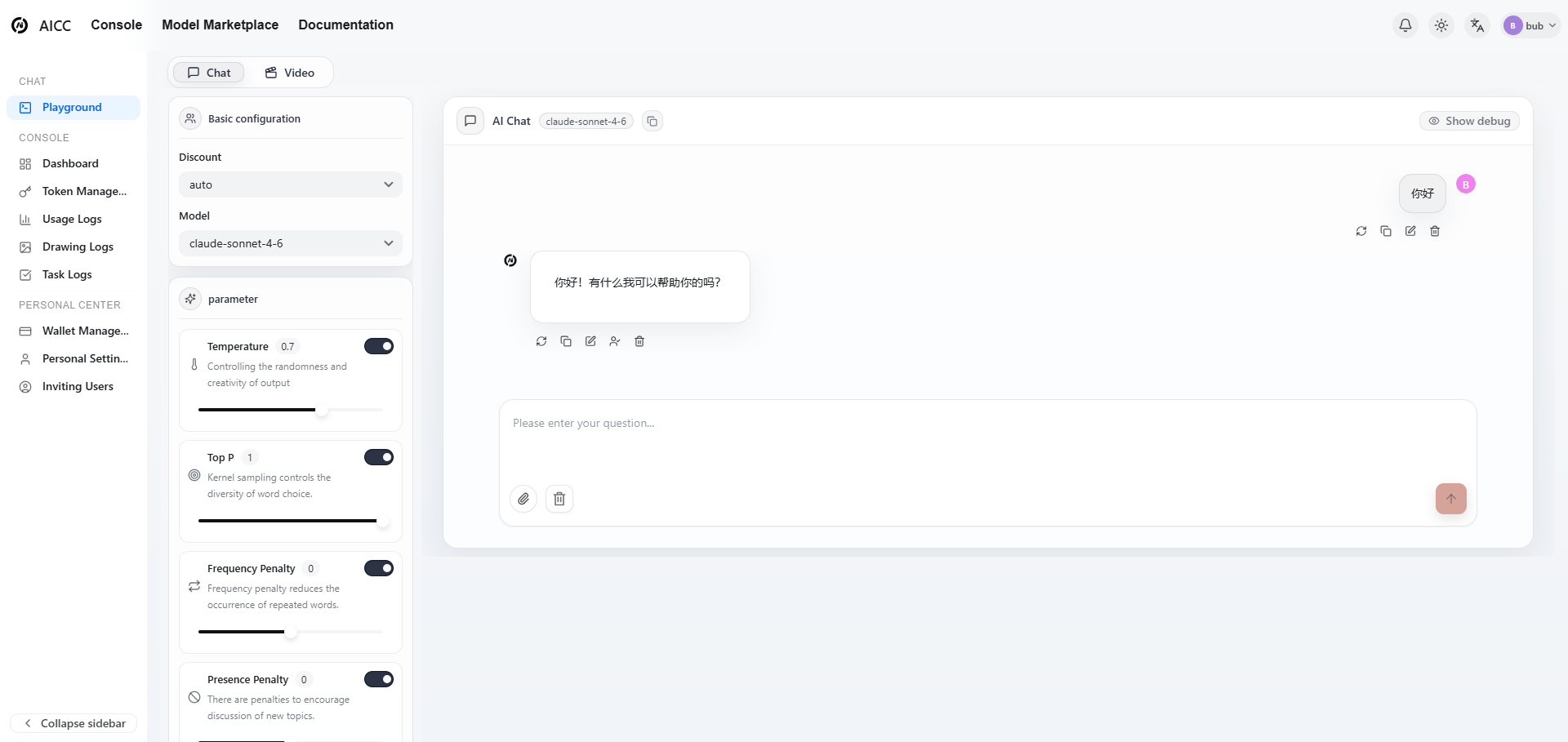
AI.cc, the Singapore-headquartered unified AI API aggregation platform, today reported 300% year-over-year growth in active API integrations for Q1 2026, driven by a structural shift in how developers and enterprises architect AI-powered applications. The company attributed the acceleration to a confluence of factors: the rapid proliferation of frontier model releases in early 2026, mounting cost pressure from single-provider API pricing, and the increasing complexity of production AI deployments that no longer fit within the capability boundaries of any single model.
The growth figure reflects a broader industry trend that AI.cc's internal platform data corroborates: the single-provider AI strategy, once the default for development teams adopting AI, is giving way to deliberate multi-model architectures in which different models are selected and routed based on task requirements, cost thresholds, and latency constraints.
"Q1 2026 was the quarter the industry stopped debating multi-model strategy and started implementing it," said a spokesperson for AI.cc. "The pace of frontier model releases — GPT-5.5, Claude Opus 4.7, DeepSeek V4, Gemini 3.1 Pro, Llama 4, Qwen 3.6-Plus, Gemma 4, all within a six-week window — made the limitations of single-provider dependency impossible to ignore. Developers are voting with their integrations."
The Numbers Behind the Shift
AI.cc's Q1 2026 platform data reveals several metrics that illustrate the depth of the transition away from single-provider AI strategies.
The average number of distinct AI models actively called per enterprise customer on the AI.cc platform reached 4.7 in Q1 2026, up from 2.1 in Q1 2025 — a 124% increase in model diversity within a single year. Among development teams that joined the platform in Q1 2026 specifically, the average reached 5.3 models within 30 days of onboarding, suggesting that new adopters are entering the multi-model paradigm immediately rather than transitioning gradually from single-model roots.
Token volume processed through the platform grew 410% year-over-year in Q1 2026, outpacing the 300% integration growth figure and indicating that existing customers are deepening their usage as well as new customers joining. The ratio of output tokens to input tokens across the platform increased materially — a signal that more of the platform's workload is shifting toward agentic and generative applications, which are inherently more output-intensive than retrieval or classification tasks.
Geographic expansion was notable. While Southeast Asia and the broader Asia-Pacific region remained AI.cc's largest market by customer count, Q1 2026 saw significant growth in developer onboarding from Europe — particularly Germany, the Netherlands, France, and the United Kingdom — as well as accelerating adoption in India, the Middle East, and Latin America. The United States remained a growing market despite the higher density of US-based competitors, with AI.cc's model breadth and below-retail pricing cited most frequently as the primary adoption drivers in developer surveys.
Across customer segments, the fastest-growing cohort was mid-size technology companies — teams of 10 to 200 engineers building AI-native products — where AI.cc reported 380% growth in new enterprise account activations year-over-year.
Why Developers Are Abandoning Single-Provider Strategies
The structural shift away from single-provider AI dependency reflects several converging pressures that became acute in the first quarter of 2026.
The model specialization gap widened. As frontier AI labs invested in differentiated capabilities rather than competing on identical general-purpose performance, the performance delta between the best model for a specific task and the average model for that task increased substantially. Claude Opus 4.7 leads on long-context reasoning and instruction-following precision. GPT-5.5 leads on tool-use-heavy computer use workflows and multimodal breadth. Gemini 3.1 Pro leads on scientific reasoning benchmarks and real-time multimodal processing. DeepSeek V4-Pro delivers frontier-adjacent coding performance at $1.74 per million input tokens. No single model is simultaneously the best and cheapest choice across all task categories — making task-specific routing the rational default for any team optimizing on both performance and cost.
The cost differential became existential for startups. The pricing spread between the most expensive and most cost-efficient frontier-class models reached 50x or greater in Q1 2026. Claude Opus 4.7 at $5 per million input tokens and $25 per million output tokens sits at one end of the spectrum. DeepSeek V4-Flash at $0.14 per million input tokens and $0.28 per million output tokens sits at the other — while delivering performance within 10–15 percentage points of frontier models on most benchmarks. For a startup processing 100 million tokens monthly, the difference between routing all traffic through a premium model and routing intelligently across model tiers is the difference between a $25,000 monthly bill and a $3,000–6,000 monthly bill. At the capital efficiency expectations of 2026 startup markets, that gap is frequently the difference between a viable and unviable unit economic structure.
The pace of model releases made single-provider commitment increasingly risky. April 2026 alone saw GPT-5.5, Claude Opus 4.7, DeepSeek V4 Preview, Gemma 4, GLM-5.1, Qwen 3.6-Plus, and Llama 4 Behemoth updates all ship within a single month. Development teams that had built tight integrations with a single provider found themselves facing recurring migration costs every time a superior model released from a different provider. Model-agnostic infrastructure — where the application logic is decoupled from the underlying model through a unified API layer — transforms model releases from migration events into one-parameter changes.
Regulatory and supply chain considerations entered the conversation. Enterprise technology and procurement teams increasingly factor geopolitical and supply chain risk into AI infrastructure decisions. Dependency on a single US-based AI provider creates concentration risk that risk management frameworks at larger enterprises began formally flagging in 2025 and actively addressing in 2026. Multi-model strategies that span US-based, European, and Asian providers provide a natural hedge against provider-specific regulatory or service disruption risks.
Platform Growth Drivers: What Developers Are Building
An analysis of workload patterns across AI.cc's expanding customer base in Q1 2026 reveals three dominant use case categories that together account for the majority of the platform's token volume growth.
AI agent development is the fastest-growing workload category, representing 41% of new integration use cases registered on the platform in Q1 2026, up from 18% in Q1 2025. Agentic applications — AI systems that autonomously plan, execute multi-step tasks, call external tools, and adapt based on outcomes — are inherently multi-model by nature. A single agent workflow routinely calls three to seven distinct models: a reasoning model for task planning, a fast model for intent classification, a specialized model for tool call execution, an embedding model for semantic retrieval, and domain-specific models for task-specific subtasks. AI.cc's OpenClaw agent framework, which provides production-ready orchestration infrastructure for these multi-model workflows, was cited as a primary selection factor by 34% of enterprise customers who onboarded in Q1.
Cost-optimized production inference accounts for the largest share of token volume — 47% of platform throughput in Q1 2026. This category encompasses teams that have reached production scale and are actively managing API costs as a material business expense. The typical pattern involves migrating existing single-model workloads to AI.cc's platform and implementing tiered routing that matches each request to the most cost-efficient model meeting the quality threshold. Median cost reduction observed in this cohort was 71% compared to pre-migration API spend, with no measurable degradation in application output quality as evaluated by customer-defined metrics.
Multilingual and multimodal applications represent the third significant growth category, particularly among developers building for Asian markets. AI.cc's comprehensive coverage of Chinese-origin models — DeepSeek V4, Qwen 3.6-Plus, GLM-5.1, Kimi K2.5, Doubao, and MiniMax M2.5 — alongside Western frontier models through a single API interface fills a genuine market gap. No US-centric aggregator provides equivalent depth of Asian-origin model coverage, making AI.cc the default infrastructure choice for developers building AI applications targeting Chinese, Japanese, Korean, and Southeast Asian language markets.
The OpenClaw Factor: Agent Framework Adoption Accelerates
AI.cc's OpenClaw AI agent framework, which provides standardized multi-model orchestration infrastructure for production agentic workflows, emerged as a significant growth driver in Q1 2026 beyond its role as a feature within the core API platform.
OpenClaw adoption grew 520% year-over-year in Q1 2026, with the framework now powering agentic workflows across customer deployments in legal technology, financial services, healthcare administration, e-commerce operations, software development automation, and content production at scale.
The framework's core value proposition — enabling developers to define routing logic at the workflow level rather than implementing custom orchestration for each application — resonated particularly strongly with mid-size engineering teams that lack the resources to build and maintain custom agent infrastructure. Customers using OpenClaw reported average reductions in agent development cycle time of 60–70% compared to equivalent custom-built implementations, and meaningfully lower rates of production incidents attributable to model availability or rate limit issues due to OpenClaw's built-in fallback and retry logic.
The combination of AI.cc's unified API and OpenClaw's orchestration layer has enabled a category of AI application that was practically out of reach for small teams twelve months ago: production-grade multi-model agents that dynamically route between five or more models based on real-time task analysis, cost constraints, and model availability signals — deployed and maintained by teams of two to five engineers rather than requiring dedicated AI infrastructure specialists.
Enterprise Momentum: Q1 2026 Highlights
Beyond the developer and startup segments that form AI.cc's largest customer base by account count, Q1 2026 saw meaningful acceleration in enterprise adoption — defined as organizations with greater than 500 employees and dedicated AI engineering teams.
Enterprise account activations grew 380% year-over-year in Q1, with the median enterprise customer processing over 200 million tokens monthly through the platform within 60 days of onboarding. Primary use cases in the enterprise segment included internal knowledge management agents, customer-facing AI assistants, document processing and analysis pipelines, code generation and review automation, and multilingual content production systems.
Key factors driving enterprise selection of AI.cc over direct provider relationships or cloud provider AI gateways included model breadth — specifically the combination of Western frontier models and Asian-origin open-source models unavailable through Azure AI or AWS Bedrock at equivalent coverage — competitive pricing on high-volume workloads, and the operational simplicity of managing a single vendor relationship and billing account across the full AI model stack.
Enterprise customers operating in regulated industries including financial services and healthcare engaged AI.cc's enterprise team around data handling arrangements, processing agreements, and compliance posture. The company's Singapore headquarters provides alignment with PDPA requirements and a regulatory environment increasingly recognized as favorable for AI infrastructure providers serving Asian markets.
Model Ecosystem Expansion: 47 New Models Added in Q1 2026
AI.cc added 47 new models to its platform catalog in Q1 2026, maintaining its position as the most comprehensive unified AI API catalog available to the developer market.
Notable additions in Q1 2026 included DeepSeek V4-Pro and V4-Flash within 48 hours of their public launch on April 24; Claude Opus 4.7 on its April 16 release date; GPT-5.5 within 24 hours of OpenAI's April 23 launch; Gemma 4's full four-model family on its April 2 Apache 2.0 release; GLM-5.1 and GLM-5V-Turbo from Zhipu AI; Qwen 3.6-Plus; MiniMax M2.5 and M2.5 Lightning; Kimi K2.5; Arcee Trinity; and Mistral Small 4.
The platform's model addition velocity — measured as time from public model release to availability on AI.cc — averaged 31 hours in Q1 2026, compared to an industry average of 7–14 days for competing aggregator platforms. For developers tracking the frontier and wanting immediate access to newly released models for evaluation and production use, this responsiveness represents a meaningful operational advantage.
Total model count on the platform reached 312 as of April 30, 2026, spanning text and reasoning, image generation, video synthesis, voice and speech, code generation, embedding, and OCR model categories.
Outlook: Q2 2026 and Beyond
AI.cc projects continued acceleration through Q2 2026, citing several near-term catalysts expected to further drive multi-model adoption.
The anticipated public release of Claude Mythos — Anthropic's next-generation model currently restricted to approximately 50 partner organizations under Project Glasswing, with reported scores of 93.9% on SWE-bench Verified and 94.6% on GPQA Diamond — represents a likely step-change in frontier capability that will reset routing logic for performance-sensitive workloads when it reaches general availability. The expected release of Grok 5 from xAI and further GPT-5.x iterations from OpenAI add to the Q2 release pipeline. DeepSeek V4's full production release, following the April 24 preview, is expected to be the most disruptive pricing event of Q2 2026, with V4-Pro's 1.6 trillion parameter open-source architecture running at $1.74 per million input tokens.
Each of these releases reinforces the core value proposition of model-agnostic infrastructure: the ability to integrate new frontier models within hours of their release, without migration projects, new SDK integrations, or additional vendor relationships.
"The AI model landscape in 2026 is evolving faster than any single-provider integration can track," AI.cc's spokesperson noted. "Our growth in Q1 reflects a developer community that has recognized this reality and is building accordingly. The infrastructure question has been settled: multi-model is the architecture. The remaining question is which platform makes it most practical to execute."
AI.cc will publish a comprehensive Q1 2026 platform report, including detailed model usage analytics, cost benchmarks, and developer survey findings, at docs.ai.cc in the coming weeks.
About AI.cc
AI.cc is a unified AI API aggregation platform headquartered in Singapore, providing developers and enterprises with seamless access to 312 AI models — including GPT-5.5 (OpenAI), Claude Opus 4.7 (Anthropic), Gemini 3.1 Pro (Google), DeepSeek V4 (DeepSeek), Llama 4 (Meta), Qwen 3.6-Plus (Alibaba), Gemma 4 (Google), GLM-5.1 (Zhipu AI), Grok 4 (xAI), MiniMax M2.5, Kimi K2.5, and more — through a single OpenAI-compatible API. The platform supports text, image, video, voice, code, embedding, and OCR model categories. Additional offerings include the OpenClaw AI agent framework, enterprise plans with SLA guarantees, AI application development services, AI Translator API, web scraping services, and GEO-optimized SEO and PR services.
Register for a free API key and starter tokens at www.ai.cc.
Full platform documentation and model catalog at docs.ai.cc.
AICC
AICC
+44 7716 940759
support@ai.cc
Legal Disclaimer:
EIN Presswire provides this news content "as is" without warranty of any kind. We do not accept any responsibility or liability for the accuracy, content, images, videos, licenses, completeness, legality, or reliability of the information contained in this article. If you have any complaints or copyright issues related to this article, kindly contact the author above.
